
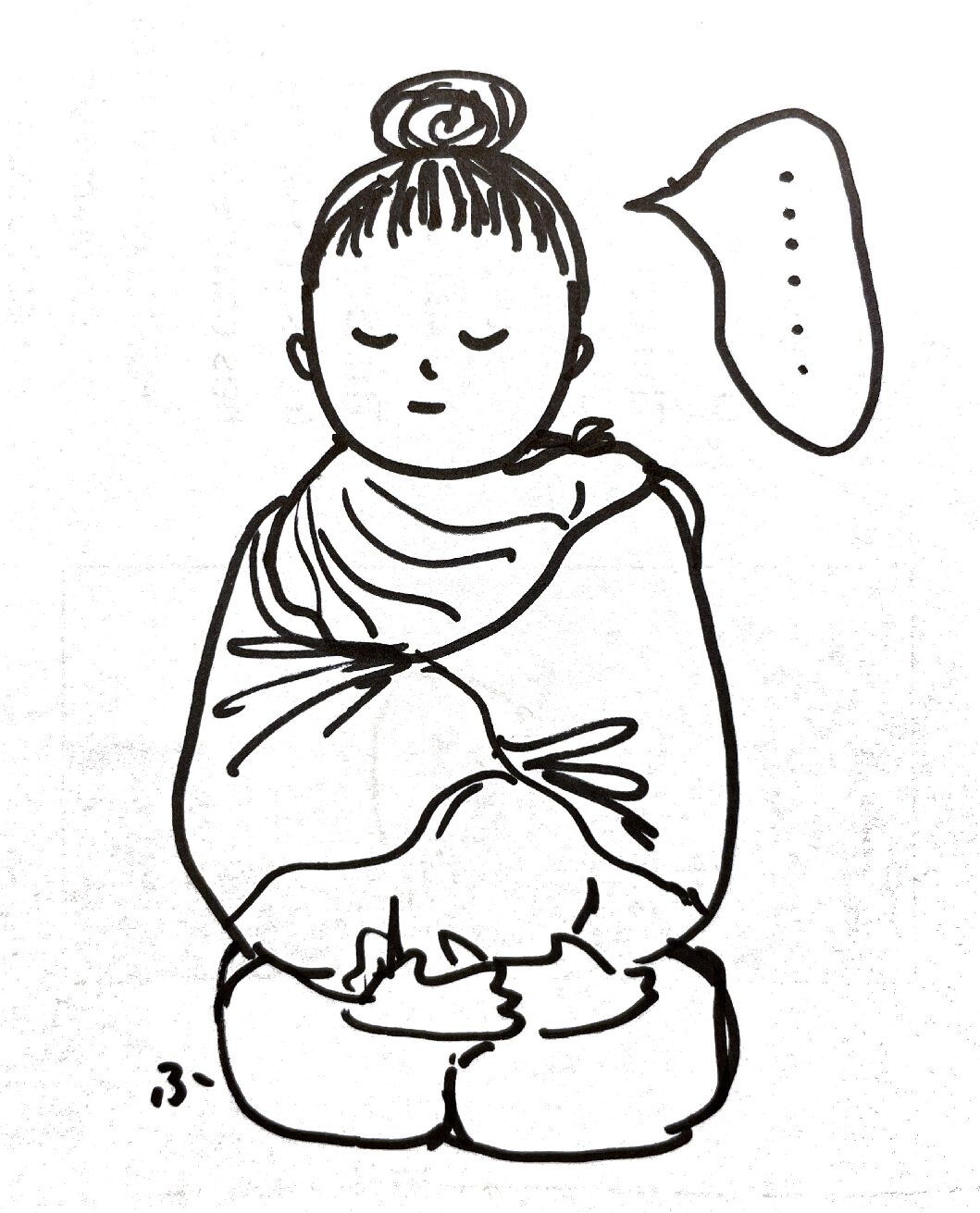
After some time away, I went on a ten-day meditation retreat. Since returning from the U.S., I hadn’t gone out much, so on my way to a meditation center deep in the mountains outside Kyoto, I noticed something about myself. Unlike my usual life in the United States—where I live as an Asian immigrant—I found myself effortlessly blending into the crowd everywhere I went. Not just in appearance, but in conversation, relationships, and even internally. When I wanted to disappear into the flow of people, I could do so freely.
This stirred many emotions. A sense of nostalgia. Relief. And strangely, once I felt that relief, confidence began to well up inside me. That made me happy—and also sad, because this is something I don’t get to experience every day where I currently live in the U.S. That sadness, in turn, brought on a more serious, contemplative mood.
Carrying all of this with me, I transferred from Kyoto Station to a local train and took a seat in a four-person, face-to-face arrangement. As the train pulled in, I checked the destination sign on the front car. Beneath it, a small banner fluttered back and forth—local, rapid, semi-express, limited express, rapid, new rapid—changing about ten times before I finally boarded the front car. On the opposite platform, another train—apparently heading to the same destination—was waiting, just as crowded. Some people moved back and forth between the platforms. Then an announcement came: an apology for a three-minute delay, for some unspecified reason.
Passengers lifted their heads slightly, glanced around, looked over at the other train. No one said anything, but everyone seemed to share the same silent question: What’s going on?
Having lived in the U.S. for many years—and having lost much of my patience—I couldn’t even wait thirty seconds before turning to the older man seated next to me. Pointing to the train across the platform, I asked, “This one gets to — faster, right?”
He tilted his head just slightly toward me and answered without turning away from the front. “Normally, yes—that one arrives first. But today it’s delayed, so this one is waiting. At — (probably the first major stop), people who need the local train will transfer from that train to this one.” His voice was quiet, calm, and remarkably easy to hear.
There were one or two points in his explanation I would usually have asked to clarify. Under normal circumstances, I might have said something like, “So you mean this train is local but — because of —, then — . Is that what happens?” But on a train headed toward a meditation center, I found myself no longer interested in that kind of thing—collecting as much information as possible to prepare for an unknowable future/’Maximization.’
I simply said, “Thank you,” and turned my gaze to the rural scenery outside the window, gently trying to stay with where I was—right here.
That said, both on the way to the retreat and after arriving, my mind continued its endless movements: leaping into the future, being pulled back into the past, or running there on its own. Some thoughts felt important—or at least tried to convince me they were—but most were repetitive ruminations, things I couldn’t do anything about, or trivial memories and thoughts. So this is what people mean by mental noise, I realized.
We tend to focus better and suffer less when there is less mental clutter. And yet—how troublesome this thing called “Monkey mind” can be.
Once I arrived at the mountain retreat, we were asked to surrender anything that might pull us away from the present moment: reading materials, notebooks, pens, devices, wallets. From after dinner on the first day, we would also refrain from speaking, making eye contact, exercising, or engaging with others—for ten full days.
Something interesting happened around the third or fourth day. Perhaps because I had been completely cut off from my usual life, my mind began to feel more spacious. I noticed more quickly when I was swimming in mental noise, and I became better at making decisions. By around day four, moments began to appear—here and there—when there were no thoughts at all.
Outside of formal meditation periods, I found myself fully absorbed in simple tasks: wiping the floor of my space → hand-washing laundry → taking a five-minute shower because someone else was waiting. As a result, my experience of time changed.
In my usual life, I am a walking example of bad multitasking. “What, it’s already this late?” is practically my catchphrase. “I did nothing, and somehow two or three hours passed” is an everyday occurrence. But as I began doing just one thing at a time, I often found myself staring at the clock inside the meditation center thinking, Wait—how is it still this early? I did so much.
To put it simply:
Being fully absorbed = using time well.
Not being absorbed = being trapped in mental noise or running on unconscious autopilot.
Through meditation—and through this silent retreat—I wasn’t just learning about mindfulness. I was experiencing it directly: the feeling of focusing on one thing at a time, and the ability to notice when my attention drifted away.
After returning from the retreat, another realization became clear: the more physically or mentally difficult something is, the more deeply we can feel even small moments of pleasure afterward.
For me, the hardest part of the retreat was sitting without moving my legs for a full hour—several times a day. But after the final meditation each evening, when I returned to my room and finally stretched my legs out, I was enveloped in a profound sense of pleasure and relief.
This, too, is a kind of neurological trick. When we endure discomfort—pain, strain, difficulty—and persist through it, the brain produces a type of pleasure (dopamine) that is deeper and longer-lasting after the rough part is over. The satisfaction after finishing a hard jog or completing complex research feels genuinely good, doesn’t it? On the other hand, when we reach for pleasure without first tolerating any discomfort, we tend to get only short-lived, fading rewards.
Dr. Anna Lembke, who studies addiction through the lens of dopamine, puts it simply: “Abstain, Maintain, Seek out Pain.” When we want to address dopamine depletion caused by overusing pleasure-inducing stimuli, the invitation is to pause, practice moderation, and intentionally choose discomfort—something that is far from easy.
There are many ways to practice mindfulness, but my personal recommendation is this: lose your phone for one day.
When you go to school or work, intentionally leave it at home—and don’t go back for it. You might find yourself looking up at the sky, simply because of the sheer inconvenience and the emptiness of having nothing to do. Notice the restlessness. Don’t try to analyze or manage the overflow of sensations and thoughts—just notice them.
You may be surprised to find that, even with something this small, you may notice the flow of time begins to change.
** Mindfulness —simply noticing what is happening in the body in the present moment, including sensations and emotions, without resisting or analyzing—plays a crucial role during the reprocessing phase of EMDR.
瞑想リトリートがもたらす時間の変化
久しぶりに10日間ほどの瞑想に行ってきました。アメリカから帰国してあまり外出していなかったので、京都の山奥にある瞑想センターへの行き道、米国でアジア人移民として暮らす普段の自分とは変わって、どこに行っても人混みに紛れる自分(外見だけでなく、会話や関係性、内面的にも、紛れたい時に自由自在に紛れることができる)に気づき、様々な感情が湧き出していました。この現象が懐かしいのと、安心感と、安心するとなぜか自信が満ち溢れてきて嬉しいのと、悲しい(アメリカの、今住んでいる地域では毎日味わえるものではないので)のと、それについて少々深刻な気分になった事、などなど。
そういった様々な想いを巡らせながら京都駅から地方電車に乗り換え、4人掛けの向き合うタイプの座席に座った私。電車がホームに入ってきた時、先頭車両の行き先案内を確かめ、その下のヒラヒラが、各駅停車、快速、快速急行、区間特急、快速、新快速と10回ほど変わるのを見届けた後、先頭の車両に乗ったのですが、向かいのホームにも同じ行き先らしい電車がほぼ同じくらいの混みようで待っています。何人かが向こう側に移動したり、戻ってきたり。同時に何らかの理由で出発が3分ほど遅れているという謝罪のアナウンスが。座っている人たちは、「うん?」と顔を上げて、周りを見回したり、向こう側の電車を見たり。誰も何も言わず、でも「何が起こっているんだ?」という思いを、その場にいる皆が共有していました。アメリカ生活が長くなり、ますます堪え性がなくなった私は、30秒も経たないうちに、隣に座っていた初老の男性に、向かいのホームの電車を指しながら「〇〇に行くのはこっちの方が早いんですよね?」と尋ねてしまっていました。その方は、私の方に頭をすこぉし傾けて、前を見たまま答えてくれました。「そう。普通だと向こうが先に着くんやけど、今日は遅れているから、こっちのが待ってるの。でも〇〇(おそらく先に出てくる駅)で(各駅が必要な人はあっちの電車から)こっちに移ってくるよ。」小さな、落ち着いた、とても聞き取りやすい声で。その方の返事の中には、私にはちょっとだけ確認したい部分(( )内に入れた部分)があって、普段なら「えーと、それは〇〇で△△だから000っていうことですか。」とか聞いていましたが、瞑想センターに向かって列車に乗っている私は、もうあまりそういうこと(「最大化志向(いわゆる“常に最善を求める思考スタイル”)」)には興味がなくなっていました。「ありがとうございます。」とお礼を言い、田舎の景色をただ眺め、「今ここにいること」に集中するよう努力していました。
まぁそうは言っても、瞑想センターにたどり着くまでもたどり着いた後も、私の心は未来に飛んでいったり、過去に引き戻されたり自分から過去へ飛んでいったりが果てしなく続きました。その中には「重要」と思えなくもない類のものもありましたが、殆どが反芻思考だったり、考えたところで何もできないことであったり、あとはどうでもいい思考や記憶で「これが雑念というものなのか。」と思いました。人は雑念の少ない時の方が、集中できたり悩みにくかったりするので、ああ、この思考(雑念)というものの厄介なこと。
山奥のリトリートに着くと、『今この瞬間』に集中するために、読む物、書くもの、筆記用具やデバイス、財布などを預けます。人を見る、話す、運動なども初日の夕食後から10日間しない事になります。
不思議なことに3日目、4日目になると、普段の生活から切り離されているからか、脳にもっとスペースが生じ、それによって、雑念の中を泳いでいる自分に気づのが早くなり、決断を下すのも上手になっていきます。そして、4日目くらいからは雑念どころか思考のない瞬間がそこここと現れ、瞑想時間のない時間は、自分のスペースの床拭きー>手でやる洗濯→次の人が待っているから5分でシャワー→などにのみ無我夢中で打ち込んでいる私がいました。その結果、時間の早さが変わりました。普段の私はマルチタスクの良くない例の具現化で、「えっ、もうこんな時間?」が決まり文句で「何もしていないのに2〜3時間経ってた」が日常茶飯事。ですが、無我夢中で一度に一つのことをやり始めた私は、瞑想センター内の時計を見て「えっ、まだこんな時間(あれもこれもやったのに)?」と目を見開くことが多くなっていきます。少し端的ですが、「無我夢中=時間を有効に使っている」「無我夢中でない時=雑念に囚われていたり無意識のオートパイロット状態」となります。そして、この一度に一つのことに集中できる感覚、またはそこから離れていくときに気づくことができる『マインドフルネス』を瞑想(サイレントリトリート)を通して、実体験していたのです。
リトリートから帰ってから気づいたのは、しんどければしんどい程、その後のちょっとした喜びが大きく感じる事。私にとって瞑想リトリートで一番苦しいのは、1時間足を崩せない事なのですが、1日の最後の座禅の後、自分の部屋に戻って足を伸ばす時、 毎日とても深い快感に包まれたのでした。これは脳のトリックであって、「痛み、しんどさなど」を感じ、それに耐えた時、長時間続く種類の快感(ドーパミン)が生まれるのです。苦しいジョギングや複雑な調べ物をやり遂げた時の快感って、本当に心地いいですよね。逆に言うと、「しんどさ」を十分「我慢」しないまま快感誘発物を使うと、短時間で効果が消えていく一時的な快感しか味わえないのです。
中毒の研究で知られるAnna Lembke博士は「Abstain, Maintain, Seek out Pain」と言っています。快感誘発物の使い過ぎからくるドーパミン不足を対処したい時、「一度立ち止まり、節度を保ち、あえてしんどさを選ぼう」と。大変難しい作業ですよね。
マインドフルネスを練習する方法はたくさんありますが、私のお薦めは「1日携帯をなくす」こと。学校や職場に行く時、わざと家に忘れてみて下さい(もちろん取りに帰らない)。あまりの不便さや手持ち無沙汰に空を見上げたりするかも。たくさんの気づきや余韻をどうにかしようとしたり分析したりせず、ただ観察してみて。時間の流れが変わってくるのに気づくかもしれませんよ。
**今の瞬間に身体に起こっていることー感覚や感情ーに気づいて、抗わうことも分析もせず、ただそれを観察するマインドフルネスは、EMDRのreprocessing phase(処理の段階)でとても重要な役割を果たします。